
Updated October 28, 2026 · By Shivam Das
Quick answer: Playing with friends can make The Hollow Night 7 easier when everyone communicates and sticks to a role, but it can feel harder when players split up without a plan, duplicate the same search, or lead The Inspector toward teammates. Roblox has not published a rule saying that a party of friends makes Night 7’s difficulty increase. Treat group play as a coordination advantage—not a guaranteed difficulty reduction.
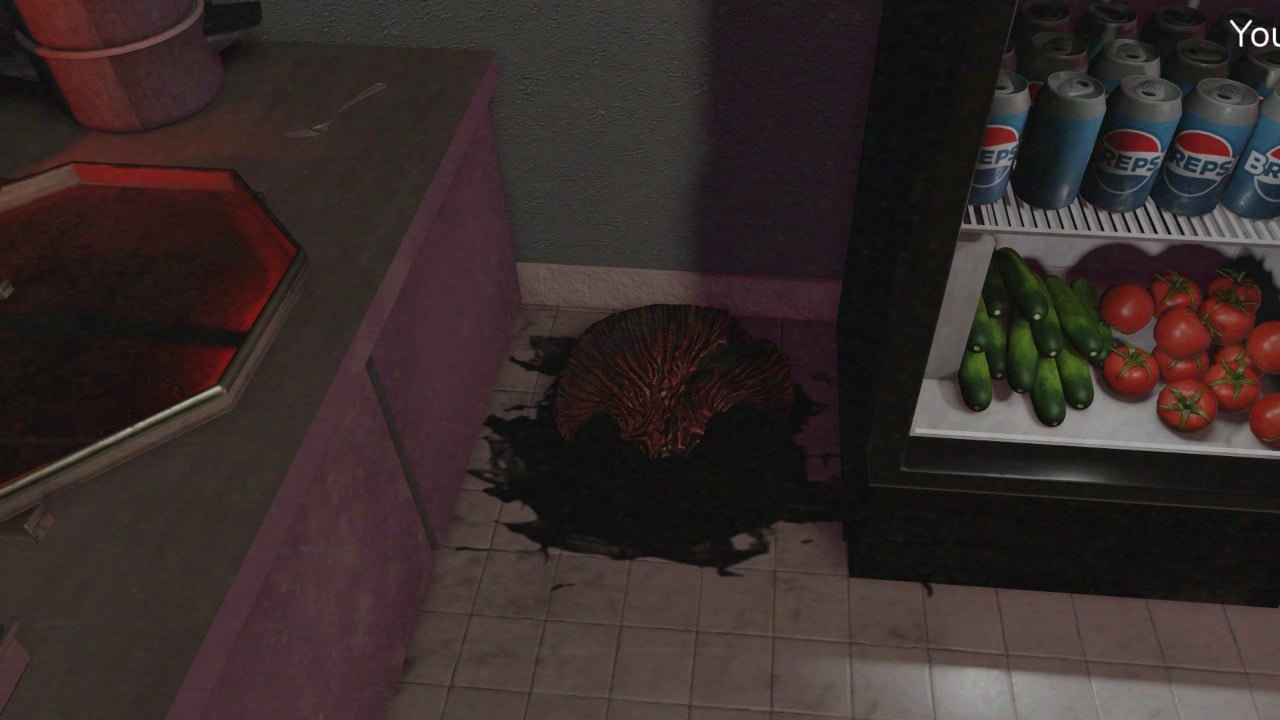
Night 7 features The Inspector, the monster associated with Scary Shawarma Kiosk: the ANOMALY. The Hollow is a Roblox-wide Halloween survival event with nine monsters across nine nights and a live finale scheduled for October 31. The official event announcement describes the event format, but it does not document a special “friends make it harder” mechanic. That distinction matters: player stories about a run feeling tougher are not proof that the game scales difficulty by party size.

Does The Hollow scale Night 7 difficulty for groups?
As of this article’s check on October 28, Roblox’s public event announcement does not confirm that Night 7 scales difficulty based on party size. It also does not publish a detailed Night 7 difficulty formula. Without an official note or a controlled test that compares otherwise identical runs, it would be misleading to say that adding friends automatically increases The Inspector’s speed, aggression, or spawn rate.
There are several reasons a group run may feel harder even if the underlying rules have not changed:
- More movement in the same space: players may bunch up, block routes, or distract one another while interpreting the objective.
- Uncoordinated searching: two people can check the same corridor while another branch remains unexplored.
- Conflicting calls: one friend says to return to the elevator while another keeps exploring, leaving the group unsure what to do.
- Risky rescue attempts: teammates may abandon a completed objective to help someone in danger, exposing more players to risk.
- Different familiarity levels: an experienced player may move ahead while first-timers are still learning the layout.
These are coordination problems, not evidence of a hidden party-size penalty. If a group suspects actual scaling, compare repeated runs and keep the objective, route, and conditions as similar as possible before drawing a conclusion.
When friends make Night 7 easier
Friends are most useful when they reduce uncertainty. Before entering the floor, agree on short callouts for the elevator, puzzle room, and danger. Use the same words throughout the run. Clear communication is more useful than everyone shouting a different theory at once.
Give every player a job
- Navigator: remembers the elevator location and calls out landmarks.
- Searcher: checks one branch at a time and tells the group when a path is cleared.
- Objective caller: tracks the current in-game task and confirms when the group should stop exploring.
- Safety caller: watches for danger and calls for regrouping or a safer route.
These are suggested communication roles, not official class abilities. If your group has only two players, combine the navigator and objective caller roles. If everyone is new, move slowly enough that all players understand the route instead of letting one experienced player disappear around the next corner.

Should your group split up or stay together?
Neither strategy is always best. Staying together makes it easier to share information and avoid losing track of the objective, but it can make searching slow if everyone follows the same person through every corridor. Splitting up can cover more ground, but only if teammates can communicate and remember how to get back.
| Situation | Better approach | Why |
|---|---|---|
| Everyone is new to Floor 7 | Stay together | Learn landmarks and the objective before taking separate routes. |
| The maze has several clear branches | Split briefly, if safe | Assign different branches and report back; do not duplicate searches. |
| The Inspector is nearby | Prioritize survival and regrouping | Exploration progress is not worth a confused chase or lost route. |
| The objective is complete | Regroup and return | Stop searching once the goal is done and use the known landmark route. |
| Voice chat is unreliable | Stay closer and use simple text callouts | A split team without reliable communication can lose time. |
For the Floor 7 puzzle, community walkthroughs report a torch-and-pumpkin sequence involving four pumpkins and a relic return. The exact room layout and route should be treated as community-reported guidance, not an official map. If your team chooses to split, agree on which branch each person will check and how you will call out a completed search.

A simple Night 7 plan for a friend group
- Before the run: choose the navigator and agree on callouts for “elevator,” “puzzle,” “danger,” and “regroup.”
- At the start: identify the elevator or return landmark before moving deep into the maze.
- During the search: explore one branch at a time. If splitting up is safe, assign different branches and report which ones are clear.
- When danger appears: stop debating the map. Use short calls and prioritize a safe route over an optional detour.
- When the objective is complete: regroup, confirm what the game shows, and return to the elevator together if that is the safest route.
- After a failed run: identify one fix—such as better callouts or fewer duplicate searches—instead of changing every tactic at once.
How to test whether a party really changes difficulty
If you want to know whether group size changes the experience, keep a small record across several attempts. Note the number of players, time needed to find the objective, how often the group gets separated, and whether the run ends because of a navigation mistake or a monster encounter. Compare runs with similar experience levels and objectives.
Do not treat one easy solo run and one difficult group run as proof. The maze, player decisions, familiarity, and chance encounters can differ. Unless Roblox or the event developers confirm a scaling rule, the fairest conclusion is that team coordination affects how a run feels, while party-size difficulty scaling remains unverified.

Official sources and more guides
Read Roblox’s official The Hollow event announcement for the event timeline and overall format, and open the official The Hollow experience for current in-game objectives. The monster’s source experience is Scary Shawarma Kiosk: the ANOMALY.
For related coverage, browse the Vervado Roblox guide collection, our Floor 7 puzzle-room route guide, and the Hollow shop restock guide.
Frequently asked questions
Does The Hollow Night 7 get harder when friends join?
There is no official confirmation that Night 7 scales difficulty based on party size. A group may feel harder because of poor communication or different player experience, but that does not prove a hidden scaling mechanic.
Is it better to play Night 7 solo or with friends?
Friends can help with callouts and coordinated searches. Solo play avoids team confusion but leaves all navigation and decision-making to one player. Choose the setup that best fits your experience and communication.
Should we split up in the Floor 7 maze?
Only if it is safe and your team can communicate clearly. Assign separate branches, remember the elevator landmark, and regroup when danger rises or the objective is complete.
Does The Inspector come from Scary Shawarma Kiosk?
Yes. Roblox’s event materials associate The Inspector with Scary Shawarma Kiosk: the ANOMALY.
Is the Floor 7 puzzle route officially documented by Roblox?
Roblox’s public event announcement does not provide a detailed Floor 7 map. Torch-and-pumpkin instructions are community-reported walkthroughs, so follow the live in-game objective if details differ.
What is the best group-play tip for Night 7?
Agree on short callouts, assign clear roles, avoid checking the same corridor twice, and stop exploring once the objective is complete.
By Shivam Das. Independent Roblox event coverage; not affiliated with or endorsed by Roblox. Third-party game images are used only as clearly labelled context. Tips about group strategy are editorial recommendations, not claims about hidden game code.