For U.S. developers and creators · Updated November 1, 2026
Roblox plans to begin removing a group of older Avatar API web endpoints on December 11, 2026. The announcement, posted to the Roblox Developer Forum on October 26, is aimed at developers whose websites, services, dashboards, bots, or other external tools call the affected routes. The endpoints are still available at the time of writing, but Roblox marks them as deprecated and is asking developers to migrate ahead of the deadline.
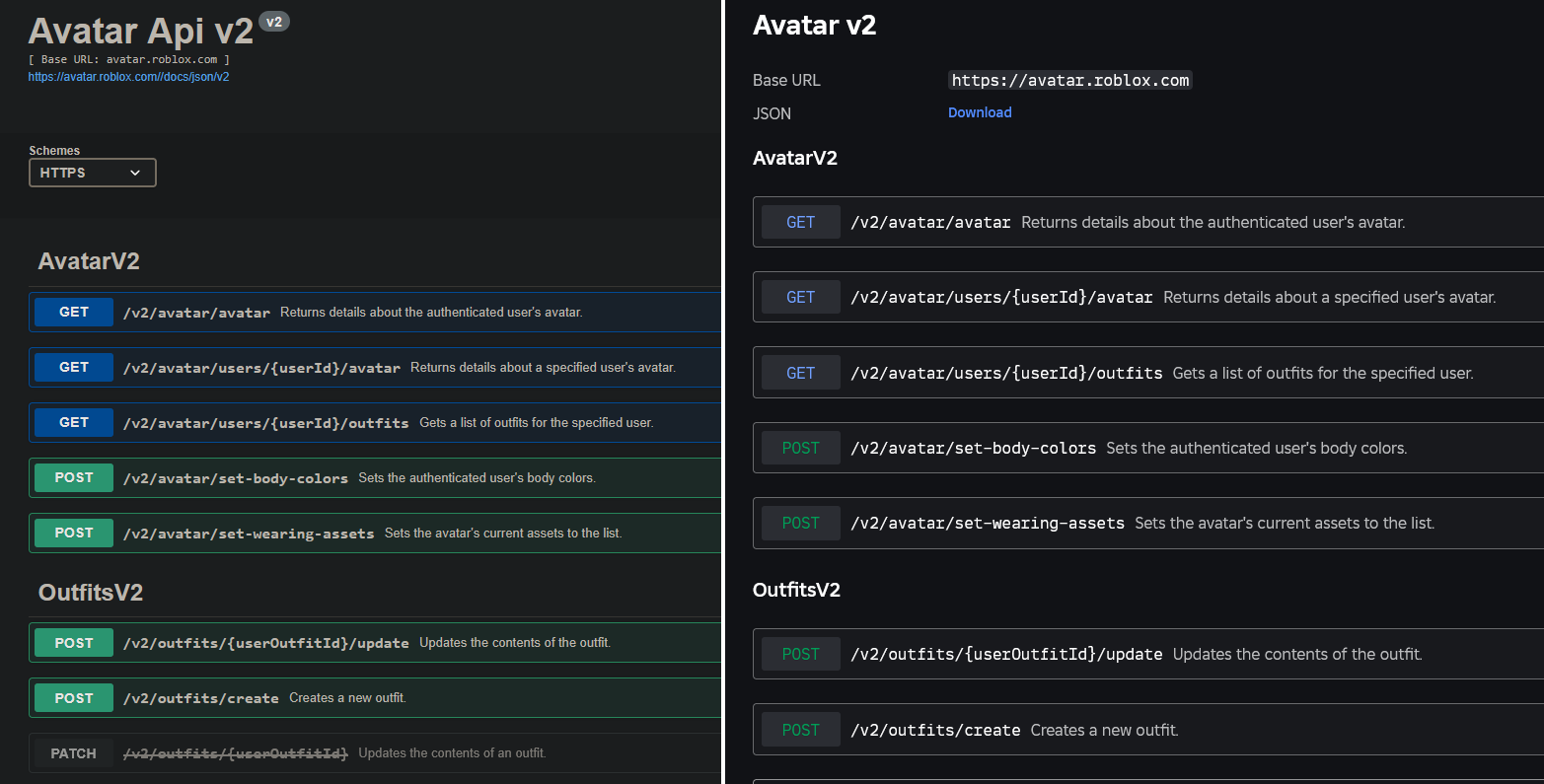
Quick answer: audit any direct requests your software makes to avatar.roblox.com. For many avatar and outfit operations, Roblox recommends V4 routes. One important exception is outfit listing: GET /v2/avatar/users/{userId}/outfits remains the supported list endpoint. The legacy /v1/avatar/metadata route has no V4 replacement, so applications that still need those editor feature flags must handle them locally.
What is changing on December 11?
Roblox says the planned removal covers older V1, V2, and V3 routes for avatar retrieval and updates, emotes, thumbnail customization, and outfit management. The scope matters: this is an API migration notice, not an announcement that Roblox avatars, catalog items, or the Avatar Editor are being shut down. Ordinary players do not need to change anything simply because they customize an avatar on Roblox.
The developers most likely to be affected are those who have built integrations that call the web endpoints directly from their own servers or tools outside Roblox's HttpService. If an application does not use the listed routes, it may not need a code change for this specific deadline.
Which old Avatar API routes are affected?
The October 26 announcement lists several endpoint families. Rather than treating every old URL as interchangeable, check the HTTP method and the exact route used by your code.
-
Avatar retrieval: older routes such as
GET /v1/avatar,GET /v1/users/{userId}/avatar,GET /v2/avatar/avatar, andGET /v2/avatar/users/{userId}/avatar. -
Currently worn assets:
GET /v1/users/{userId}/currently-wearing. - Avatar updates: older V1 and V2 routes for body colors, scales, avatar type, and worn assets, plus older emote and thumbnail-customization operations.
- Outfit management: older V1 and V3 routes for outfit details, creation, and updates.
-
Avatar metadata:
GET /v1/avatar/metadata, which Roblox says has no V4 replacement.
This list is a practical map, not a substitute for the full official announcement. Review the source post for the complete set of methods and route paths before changing production code.

Recommended replacements: where V4 fits
Roblox's migration guidance directs developers to the newer V4 Avatar API for many common operations:
| Task | Recommended route |
|---|---|
| Get the authenticated user's avatar | GET /v4/avatar |
| Get another user's avatar | GET /v4/avatar/users/{userId} |
| Read a user's worn asset IDs |
GET /v4/avatar/users/{userId}?selectionTypes=AvatarModel, then read asset IDs from the returned avatar model |
| Update avatar settings and worn assets | PATCH /v4/avatar |
| Get outfit details | GET /v4/outfits/{outfitId}/details |
| Create an outfit | POST /v4/outfits/create |
| Update an outfit | PATCH /v4/outfits/{outfitId} |
| List a user's outfits |
GET /v2/avatar/users/{userId}/outfits (this V2 list remains supported) |
Do not assume that migration means changing only v1 or v2 to v4 in a URL. Request bodies, field masks, authentication requirements, query parameters, and response structures can differ. Compare the current endpoint documentation and update the code that reads and writes the returned data.
The important exception: avatar metadata has no V4 replacement
The route GET /v1/avatar/metadata is a special case. Roblox says it will be removed and has no V4 replacement. The announcement describes it as web Avatar Editor feature-flag metadata. If your product depends on those flags, identify exactly which values you use and plan how to maintain the required configuration locally. Do not build a migration around a replacement endpoint that Roblox has not provided.
A practical migration checklist before December 11
-
Search every codebase. Look for
avatar.roblox.com, the affected route fragments, and API client wrappers that may hide the full URL. - Inventory each call. Record the HTTP method, route, purpose, authentication method, caller, and user-facing feature that depends on it.
- Map calls one by one. Use Roblox's exact recommended route for each operation. Keep the supported V2 outfit-list route rather than replacing it unnecessarily.
- Review request and response handling. Check field names, selection parameters, field masks, error handling, and any assumptions your application makes about returned data.
- Test safely in development. Validate avatar reads and outfit workflows with test accounts. Avoid experimenting with destructive or account-changing requests against real users.
- Deploy in stages. Roll out the new integration gradually where possible, and monitor failed requests, unexpected response shapes, and support reports.
- Remove stale code. Once the replacement is stable, retire old route constants, dead code paths, and outdated documentation so a future developer does not reintroduce them.

Does this affect Roblox Studio experiences?
The announcement specifically discusses calls made from external web servers or tools outside HttpService. It should not be read as a blanket shutdown of every avatar-related feature available to Roblox experiences. Roblox documents avatar functionality across different APIs and services, so developers should identify the exact service and endpoint their project uses before deciding that it is affected.
For example, an experience that uses a Roblox-provided in-experience service is not automatically in the same situation as a separate website that directly calls a deprecated avatar.roblox.com route. Check the relevant service documentation and the exact wording of the deprecation notice rather than applying the change to unrelated systems.

Why developers should not wait until the deadline
December 11 is a planned removal start date, not a safe date to begin investigating. A migration can uncover hidden dependencies: a profile page may rely on a worn-assets response, an outfit editor may call an older create route, or an analytics dashboard may use metadata that has no direct replacement. Finding those dependencies early gives teams time to test the new behavior and decide how to handle the metadata exception.
For smaller projects, the first step can be straightforward: search the repository for the old routes, make a short endpoint inventory, and compare it with Roblox's official mapping. Larger integrations should assign an owner to each affected call and track the migration through testing and deployment.
Official Roblox resources
- Roblox Developer Forum: Official List of Deprecated Web Endpoints (October 26, 2026)
- Roblox Creator Hub: Avatars API reference
- Roblox Creator Hub: avatar.roblox.com endpoint reference
Related Roblox coverage
- Roblox avatar outfit ideas using free event items
- Roblox avatar looks using free event items
- Roblox avatar item offer: last-chance checklist
Frequently asked questions
When will Roblox remove the old Avatar API endpoints?
Roblox says it plans to begin removing the listed legacy endpoints on December 11, 2026. The announcement was posted on October 26, 2026.
Do regular Roblox players need to do anything?
No action is required from ordinary players just for using the Roblox website or changing their avatar. The migration is relevant to developers and tools that call the affected web API routes.
Which API should replace the old avatar endpoints?
For many avatar operations, Roblox recommends V4 routes, including GET /v4/avatar, GET /v4/avatar/users/{userId}, and PATCH /v4/avatar. Outfit details, creation, and updates also have V4 routes.
Is the V2 outfit-list endpoint being removed?
No. Roblox's announcement says to keep using GET /v2/avatar/users/{userId}/outfits. It identifies the older V1 outfit-list route as deprecated.
What happens to /v1/avatar/metadata?
Roblox lists it for removal and says there is no V4 replacement. Developers that still need the relevant feature-flag values should plan to maintain them locally.
Will every avatar-related Roblox service stop working?
The notice names specific legacy web endpoints. It does not say that all avatar features or all in-experience avatar services are being discontinued. Check the precise API your project uses.
What should a developer do first?
Search the codebase for calls to avatar.roblox.com, list the affected methods and routes, then map each call to Roblox's official migration guidance and test the replacement before the deadline.
Reporting note: This article reflects Roblox's October 26, 2026 developer announcement and the Creator Hub endpoint reference available at the time of publication. API details can change; consult the official documentation before deploying a migration.
By Shivam Das